
Most AI content platforms promise to do everything. Very few actually fit the way mission-driven B2B teams work. Here are ten platforms worth your attention , what each one does well, where it falls short, and who it’s actually for.
1. Nexus Marketing Agency — Best Managed AI Content Service for Mission-Driven Orgs
Nexus Marketing Agency is a HubSpot-focused marketing agency that handles content creation, SEO, lead generation, and CRM strategy for nonprofits, associations, healthcare organizations, and faith-based groups. If you’re tired of learning another AI tool and just want content that converts, this is the option to look at first.
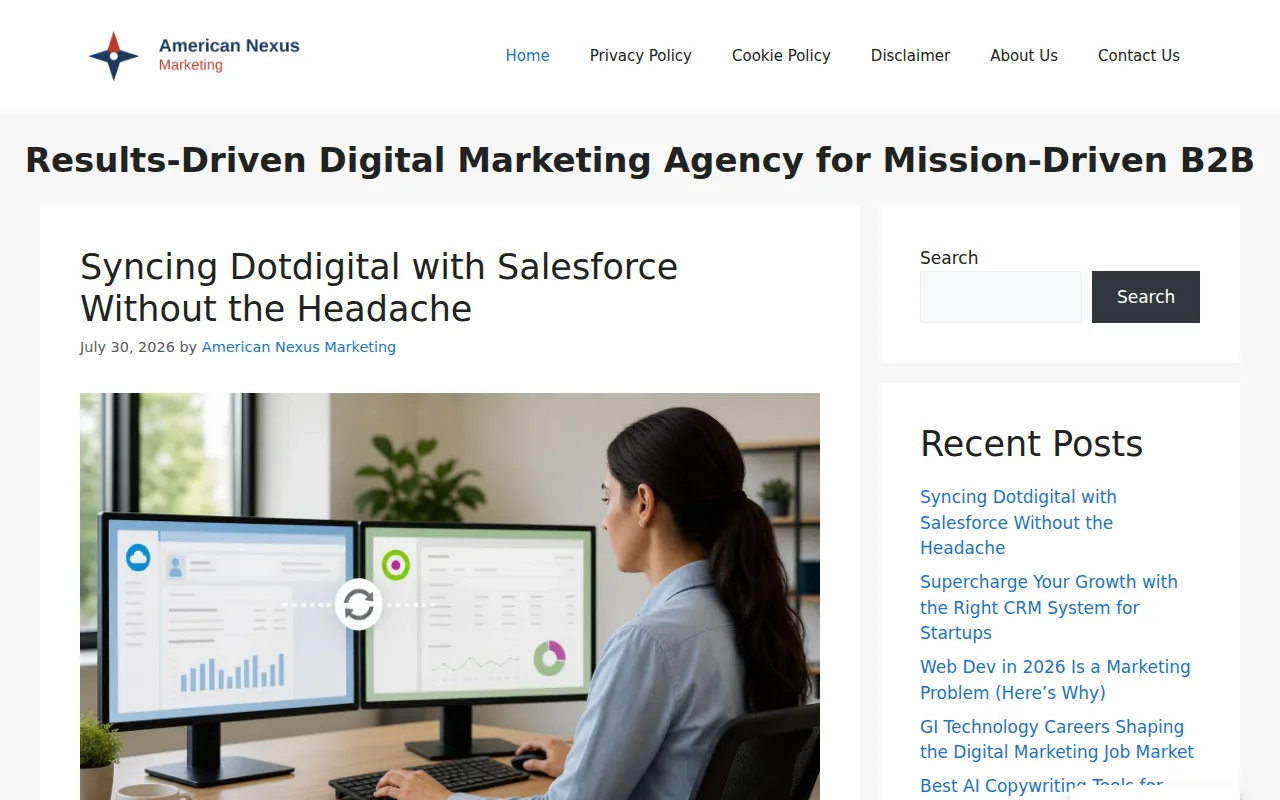
What separates Nexus from a self-serve AI tool is accountability. You get a team that already understands the compliance sensitivities, donor-communication tone, and long sales cycles that come with mission-driven sectors. They use AI to scale production, but a strategist reviews every piece before it goes out. That matters when your audience includes board members, grant funders, or association delegates who will notice a tone-deaf article immediately.
Nexus ties every content deliverable directly into HubSpot, so your blogs, landing pages, and email sequences live in the same system as your CRM data. You’re not copying drafts between tabs. If a contact clicks an article about membership benefits, HubSpot logs it and can trigger a follow-up sequence. That closed loop is what makes content actually generate leads rather than just page views. For teams exploring content creation services built specifically for nonprofits, Nexus is the closest match to a true managed solution.
The honest caveat: Nexus is a retainer-based agency, not a monthly subscription you can cancel after one bad blog post. If you need five hundred product descriptions tomorrow, this isn’t the right fit. But for organizations that want content tied to measurable pipeline growth, it’s the most accountable option on this list.
2. Averi — End-to-End AI Content Engine with Built-In SEO and GEO Scoring
Averi is an AI-powered content marketing workflow built for lean teams that want high-volume output without hiring a full content department. You onboard your brand once, and Averi learns your ICP, competitors, and voice. From there it generates topic suggestions with competitive gap analysis already mapped, drafts articles in your brand voice, and publishes straight to your CMS.
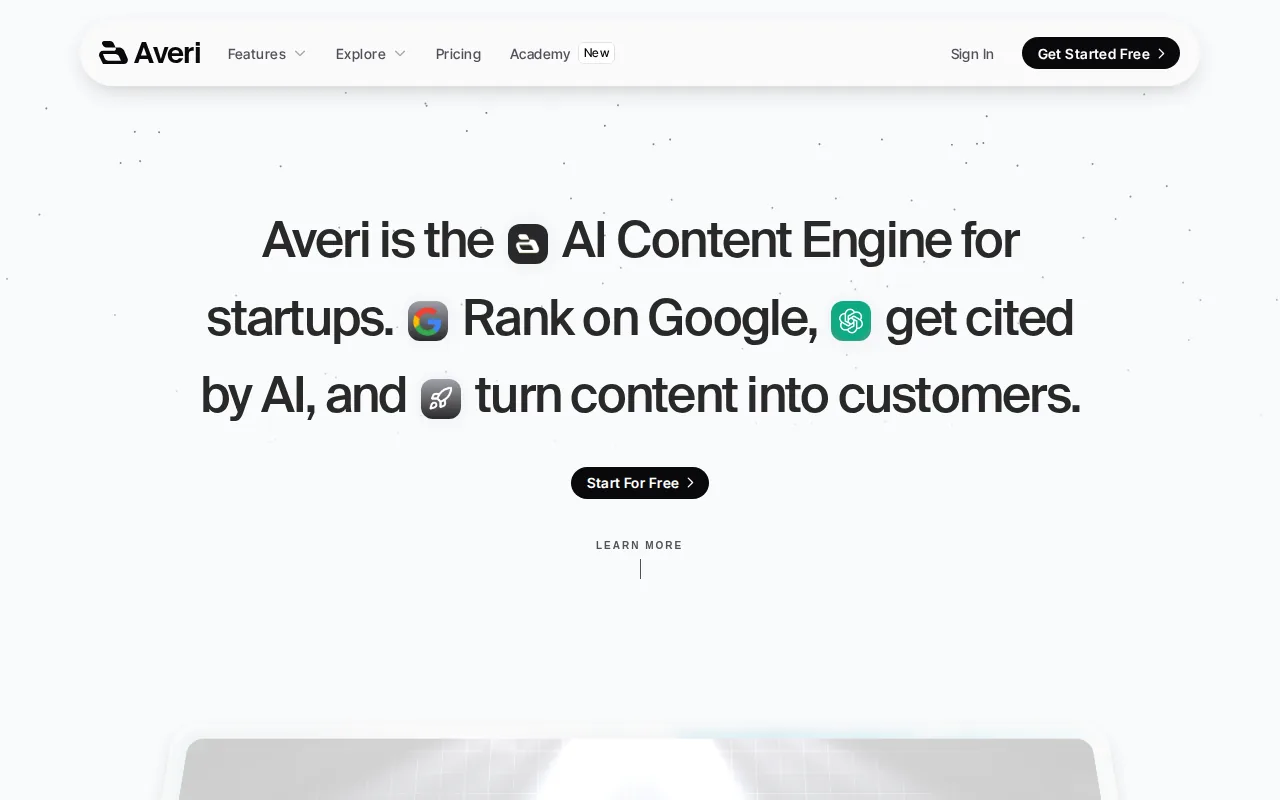
The dual-layer SEO and GEO scoring is what makes Averi genuinely useful right now. Most platforms optimize for Google or AI search engines , Averi scores content against both signals in the same draft. That’s meaningful because ranking on Google and getting cited by ChatGPT or Perplexity require slightly different structural choices, and most writers don’t have time to check both manually.
Averi’s calendar view with autopublish and LinkedIn post generation round out a workflow that would otherwise require three or four separate subscriptions. The 14-day free trial is a real trial, though it stops short of full automation without a paid plan. Teams that want to test before committing will find the trial useful. Small teams with a clear content strategy will get the most from it; solo founders who haven’t defined their ICP yet may find the onboarding step harder than expected.
3. Jasper — Brand-Trained AI for Teams with Strong Collaboration Needs
Jasper is purpose-built for marketing teams of five or more who need consistent brand voice across a lot of content types at once. The platform trains on your brand guidelines and deploys over 100 specialized AI agents that handle everything from long-form blog drafts to ad copy variations.
Its integration with Surfer SEO is a usable advantage for teams that care about on-page optimization. You draft in Jasper and optimize with Surfer’s content score without switching tabs. The collaboration layer lets multiple writers and editors work in the same document with comments and approvals, which mirrors the workflow of a mid-size content team rather than a solo blogger.

The catch is access. Jasper has no free tier and requires a credit card to start a trial. of 31 AI content tools, Jasper tops the automation depth chart with over 360 documented automated actions , yet it’s one of the least accessible options for teams with tight budgets. If your team is already producing content at volume and needs brand governance tools to scale, Jasper earns its price. If you’re testing the category for the first time, the cost of entry is a real barrier.
4. Copy.ai — AI Marketing OS Built for GTM and Sales Enablement
Copy.ai describes itself as an AI Marketing OS, and that framing is accurate. The platform is less about writing individual blog posts and more about running autonomous content workflows across a go-to-market motion. It connects to over 1,000 platforms, making it the only tool in this category that functions as a genuine workflow hub rather than a standalone editor.
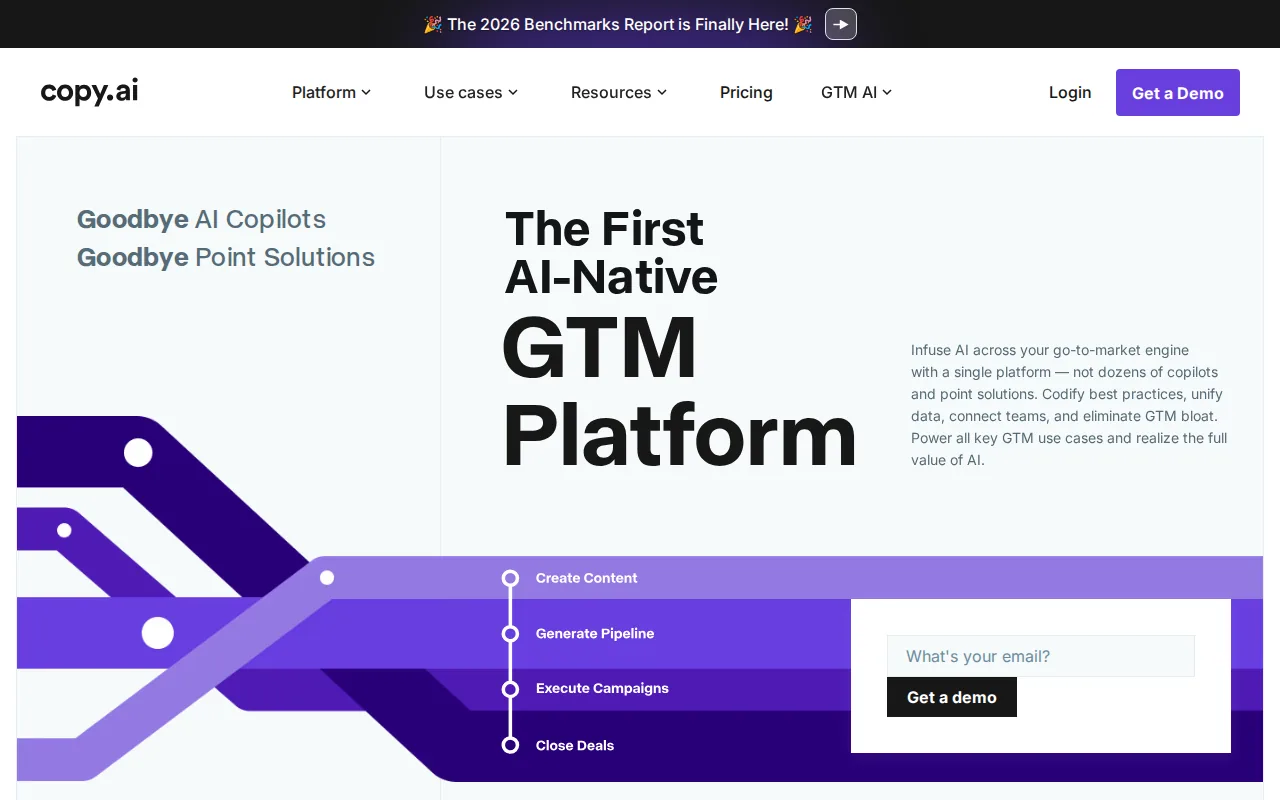
Sales enablement teams get the most value here. Copy.ai can run content agents that pull CRM data, draft personalized outreach sequences, and feed collateral into your pipeline without a human queuing each task. For B2B teams running account-based programs, that degree of automation reduces the manual handoff between marketing and sales.
Copy.ai is one of two platforms on this list with a genuinely free tier, which makes it easy to test. The workflow builder is powerful but assumes you already know what workflows you need. Teams that show up without a documented GTM process will spend more time configuring the tool than producing content. Once those workflows exist, Copy.ai runs them at scale with minimal ongoing effort. Small teams and solo marketers may find the interface more complex than they need.
5. Writesonic — AI Content Platform with Real-Time Search Visibility Tracking
Writesonic runs every article through a pipeline of over 100 steps that covers audience research, SERP scraping, positioning analysis, multi-step drafting, and a humanizer pass that strips AI tells before the piece reaches your editor. What distinguishes it from generic AI writers is the explicit focus on both Google and AI search visibility in the same output.
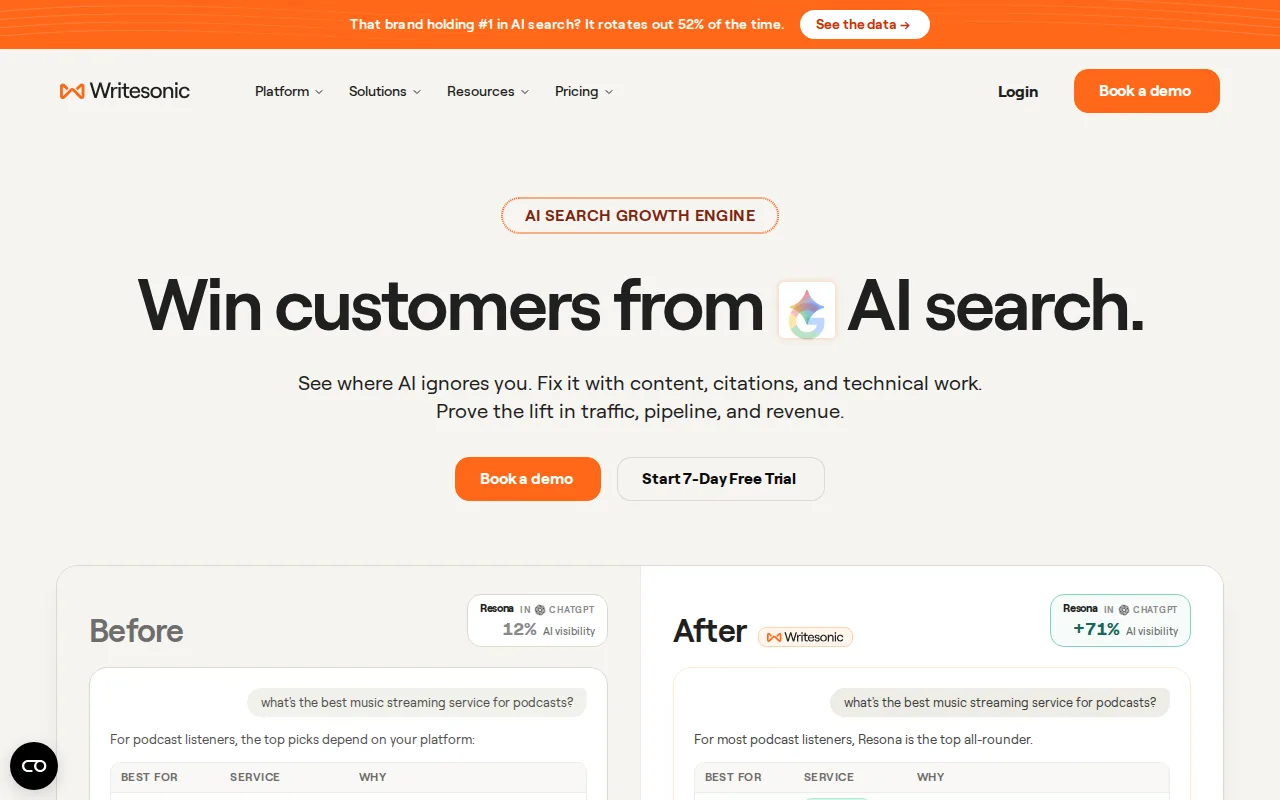
The platform integrates with Ahrefs for keyword data and pulls from a dataset of over two billion real search conversations to shape how it frames each article. That’s not a small thing. Most AI writers generate plausible-sounding text; Writesonic’s pipeline maps actual search demand before a word is drafted. The result is content that’s built to rank and built to be cited by AI engines simultaneously, which solves a tension that most platforms ignore.
For agencies, the per-client brand profiles and style-guide enforcement mean you’re not manually resetting voice settings between accounts. The 7-day free trial requires no credit card. The main limitation: long-form depth suits established content programs better than early-stage teams still defining their audience. If your team is still figuring out its content strategy, Writesonic’s pipeline can feel like a lot of infrastructure for an unclear goal.
6. Frase — SERP-Driven Brief Builder for Data-Backed Content Planning
Frase is built for content teams and SEO agencies that want data to drive every brief. The platform runs live SERP and competitor analysis, scores content against real-time topic signals, and tracks where your pages show up across AI engines like ChatGPT, Perplexity, Claude, and Gemini.
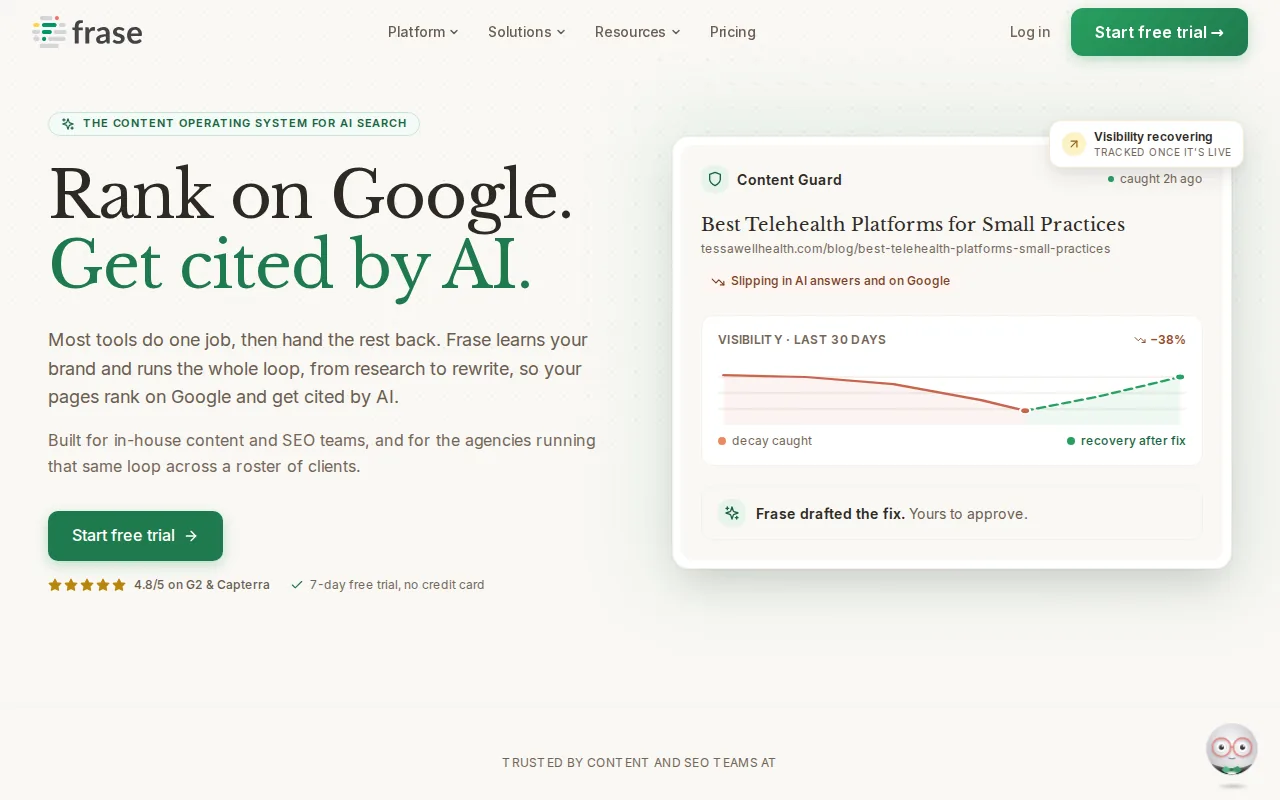
The Content Guard feature is genuinely useful for teams managing large content libraries. It watches your live pages for ranking drops, drafts a revision when a slide is detected, and queues the fix for your approval. You can set low-risk fixes to publish automatically , though human review stays on by default, which is the right call for regulated or brand-sensitive sectors like healthcare and financial services. Plans open at $39 per month billed annually, with most in-house teams landing on the Professional tier at a higher price point.
Frase doesn’t generate strategic content plans from scratch. It excels at optimizing and refreshing what you’ve already decided to build, not at telling you what to build next. Teams that need a content strategist to set the roadmap, and then want a tool to execute and maintain it, will find Frase’s loop very efficient. Teams that need the strategy layer built in should look at Averi or Writesonic instead.
7. AirOps — Enterprise AI Content OS for High-Volume Publishing at Scale
AirOps is built for enterprise marketing teams that need to move from AI visibility data to published, governed content without stitching together five separate tools. The platform runs a closed loop: signal detection, content production under brand governance, CMS publishing, and performance measurement, all inside one system.
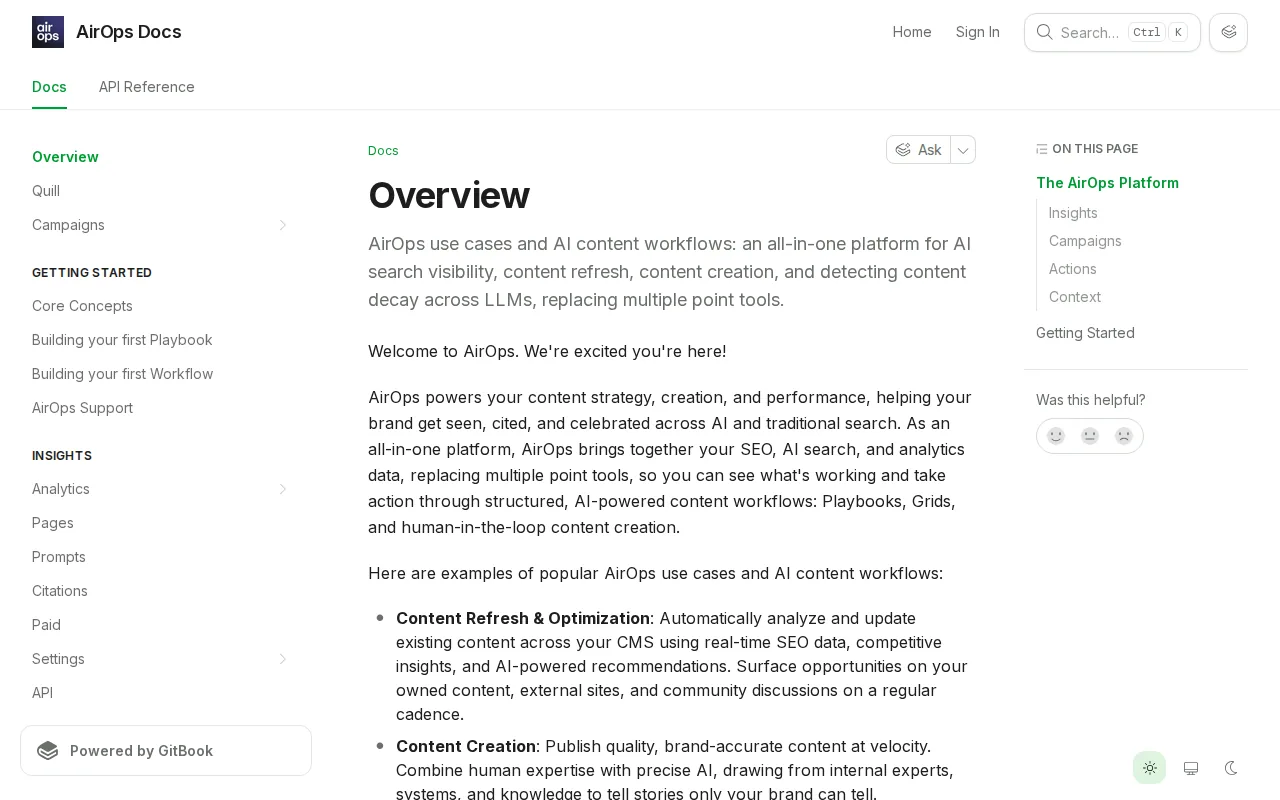
The architecture includes several connected execution surfaces. Playbooks run agent-executed workflows with human review checkpoints. The visual workflow builder manages granular technical automation. Campaigns connect discovery, strategy, and publishing triggers into one orchestrated flow. For a content director managing a team of ten or more, that means brand standards are enforced by the system, not by memory.
AirOps supports bulk operations across 100-plus articles at a time and publishes directly to your CMS. It’s also one of the few platforms that handles off-site citation building, connecting content production to AI answer engine visibility. The pricing reflects its enterprise scope, with quote-based plans for larger teams. Organizations under $50 million in revenue or teams publishing fewer than 20 articles a month will find AirOps over-engineered for their current needs. For high-volume B2B software, fintech, and agency operations, it’s one of the most complete options available.
8. Contently — Human + AI Platform with 160,000+ Vetted Freelance Writers
Contently combines AI content optimization with a network of 160,000-plus vetted freelance writers, journalists, and subject-matter experts. The platform’s AI Studio uses six specialized agents that cover brand voice alignment, SEO optimization, quality assurance, fact-checking, LLM optimization, and AI detectability reduction. Content gets scored against 30-plus signals that influence whether AI engines cite or surface a page.
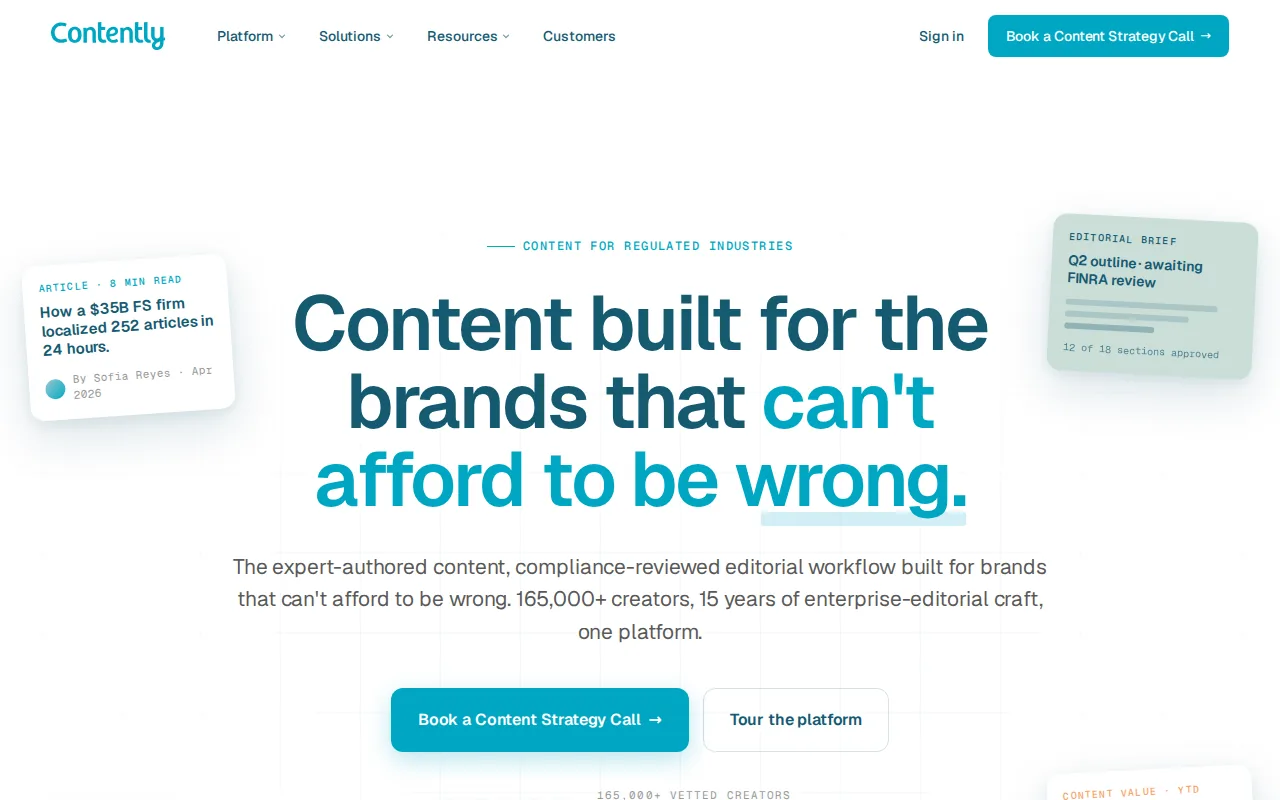
The freelancer marketplace is the differentiator. Once the platform identifies a content gap, you can commission a rewrite from a vetted writer without leaving the workflow. A dedicated managing editor reviews all outputs for accuracy and brand compliance. For enterprise brands in regulated industries, that human layer is often non-negotiable. Contently reports a 42% average lift in AI-driven traffic for content that goes through its optimization pipeline.
The cost is real. Contently operates on custom pricing with a six-figure annual commitment typical for full platform access, and pricing is available on request. Implementation fees are separate. Contently is built for large content operations — if you’re publishing fewer than 20 articles a month, the economics don’t work in your favor.
9. Canva — AI-Powered Visual Content Creation for Non-Designers
Canva’s AI tools generate layouts, images, and presentations from a short brief or a reference image. The “Design for me” feature produces multiple hero concepts instantly, which cuts the time between a content brief and a publishable visual asset from hours to minutes. It’s useful for social media graphics, event promotion, and donor communications , anywhere visual content matters but a dedicated designer isn’t available.

Canva is not a long-form content platform. It doesn’t draft blog posts, run SERP analysis, or manage an editorial calendar. Think of it as the visual layer that sits alongside whichever writing platform your team uses. For nonprofits and associations that regularly produce event materials and annual reports, it fills a real gap without requiring design software expertise. Some advanced features are behind paid plans, so teams with complex brand systems should check the feature tiers before committing.
10. ChatGPT — General-Purpose AI for Flexible, Research-Backed Content Drafting
ChatGPT is the one genuinely free option on this list that requires no credit card and no trial period. The web browsing capability lets it pull real-time information, which makes it useful for research-backed first drafts on topics where information changes quickly. The platform’s rapid adoption is a signal of how broadly it’s already embedded in marketing workflows.
The limitations are real. ChatGPT has no persistent brand voice memory between sessions. It doesn’t run SERP analysis, manage a content calendar, or publish to your CMS. You provide the strategy, the brief, and the editorial judgment. What it returns is a flexible draft that needs a human to shape it into finished content. For solo marketers or small teams testing AI-assisted writing for the first time, it’s the lowest-friction starting point. Teams that need governed, brand-consistent output at scale should move toward one of the purpose-built platforms above.
How to Choose the Right AI Content Creation Platform for Your Organization
The right choice depends on four honest questions: What stage is your content program at? Who reviews and approves content before it publishes? What does your tech stack already include? And what does success actually look like in six months?
For mission-driven B2B organizations, integration with your CRM matters more than raw output volume. A platform that generates 50 articles a month but drops them into a folder no one monitors isn’t producing leads , it’s producing noise. Platforms that connect to HubSpot or push directly to your CMS turn content into a trackable asset. Teams exploring AI SEO tools for 2026 will find that the best content platforms are inseparable from the SEO layer anyway.
Budget range also shapes the shortlist fast. Only two platforms here are genuinely free (Copy.ai and ChatGPT). Trial options exist for Averi and Writesonic, but full automation requires a paid plan. Enterprise options like AirOps and Contently require a significant annual commitment and are priced for teams with corresponding content volume. Across the B2B marketing landscape, dedicated budget for AI marketing tools has become standard , meaning the “we’ll figure it out with free tools” phase is largely over for competitive organizations.
Small teams running a full marketing stack (CRM, funnels, email, and content) often find that consolidating tools saves more time than adding a new specialized platform. Some operators solve this by choosing an all-in-one marketing platform that covers CRM, funnels, and automation alongside a dedicated content tool, rather than managing six disconnected subscriptions. The right pairing depends on whether your team’s bottleneck is content production or the pipeline that content feeds into.
Frequently Asked Questions
What is an AI content creation platform?
An AI content creation platform is software that uses artificial intelligence to help teams plan, draft, optimize, and publish content. Most platforms handle some combination of keyword research, article drafting, brand voice enforcement, and CMS publishing. The better ones also score content against both Google ranking signals and AI search engine citation patterns, which are now separate but related goals for most B2B marketers.
Which AI content platform is best for nonprofits and associations?
Nexus Marketing Agency is the strongest fit for nonprofits and associations because it combines managed AI content production with HubSpot CRM integration and deep familiarity with mission-driven communication styles. For teams that prefer a self-serve tool, Averi or Frase work well for smaller budgets. The key is choosing a platform that understands your audience’s expectations, which are meaningfully different from commercial B2B content.
Do AI content creation platforms replace human writers?
No. Every platform on this list is built around human review at some stage. Managed services like Nexus include editorial oversight by default. Tools like Contently layer in vetted freelance writers. Even autonomous platforms like AirOps and Writesonic have built-in approval checkpoints. AI handles research speed and draft volume; humans handle judgment, accuracy, and brand tone. Teams that skip the human review step typically produce content that reads as generic.
Are there free AI content creation platforms worth using?
Copy.ai and ChatGPT are the two genuinely free options. Both are useful for first drafts and workflow testing. Neither offers the SERP analysis, brand voice enforcement, or CMS publishing that paid platforms include. Averi and Writesonic offer time-limited trials with no credit card required. For organizations with real content goals and a measurable pipeline, a paid platform almost always delivers better ROI than a free one used inconsistently.
How do I know if an AI platform fits my existing tech stack?
Check three things before signing up: whether the platform integrates with your CRM (HubSpot, Salesforce, or similar), whether it publishes directly to your CMS, and whether it pulls data from the SEO tools you already use. Copy.ai connects to over 1,000 platforms. Writesonic integrates with Ahrefs. Frase pushes to WordPress, Webflow, and Wix. Platforms that require CSV uploads as the main data connection add manual overhead fast. For teams using CRM integration services, verifying bidirectional data flow before committing to a content platform saves significant setup time.
What’s the difference between AI content tools and AI content platforms?
AI content tools typically do one job , drafting copy, generating an outline, or suggesting keywords. AI content platforms connect multiple steps into a managed workflow: research, drafting, optimization, approval, publishing, and performance tracking. Platforms are more expensive and more powerful. Tools are cheaper and more flexible but require you to manage the workflow yourself. Most growing B2B teams eventually outgrow standalone tools and need the structure a platform provides.
Conclusion
If you’re a mission-driven B2B organization and want content that actually feeds your pipeline, Nexus Marketing Agency is the place to start. You get HubSpot-integrated content, sector-specific expertise, and a team accountable for results , not just word counts. Ready to see what managed AI content looks like for your organization? Schedule a consultation with Nexus Marketing Agency and find out what a content program built around your mission can actually produce.