
Scaling Up: The Best Email Marketing Software for Large Business Needs
Why Choosing the Best Email Marketing Software for Large Business Changes Everything
If you’re evaluating the best email marketing software for large business needs, here are the top platforms to consider in 2026:
| Platform | Best For | Starting Price (Enterprise) |
|---|---|---|
| Salesforce Marketing Cloud | CRM-native, high-volume sending | ~$1,250/mo |
| Adobe Campaign | Multi-channel + offline orchestration | Custom pricing |
| Adobe Marketo Engage | B2B lead management at scale | Custom pricing |
| Klaviyo Enterprise | B2C omnichannel + unified data | Custom pricing |
| ActiveCampaign | Automation depth + deliverability | From $15/mo |
| GetResponse MAX | High-volume ROI, ecommerce | Custom pricing |
Email marketing delivers an average ROI of $36 for every $1 spent — that’s 3,500%. For a large business sending millions of emails, even a small improvement in open rates or deliverability can mean serious revenue.
But here’s the thing: the tools that work for a small business break down fast at enterprise scale.
A solo founder sending newsletters to 500 subscribers has very different needs than a marketing team managing millions of contacts across multiple regions, brands, and channels. Large businesses need:
- Advanced automation that goes beyond simple drip sequences
- Dedicated IP addresses and robust deliverability infrastructure
- GDPR and CCPA compliance built in, not bolted on
- Deep CRM and data integrations with existing enterprise stacks
- AI-powered personalization at scale across email, SMS, and beyond
As Gartner Peer Insights reviewers note, successful enterprise email deployments require strengthening your data architecture and aligning leadership — including finance — before you ever sign a contract.
This guide cuts through the complexity so you can compare the leading platforms side by side and find the right fit for your organization’s size, budget, and goals.
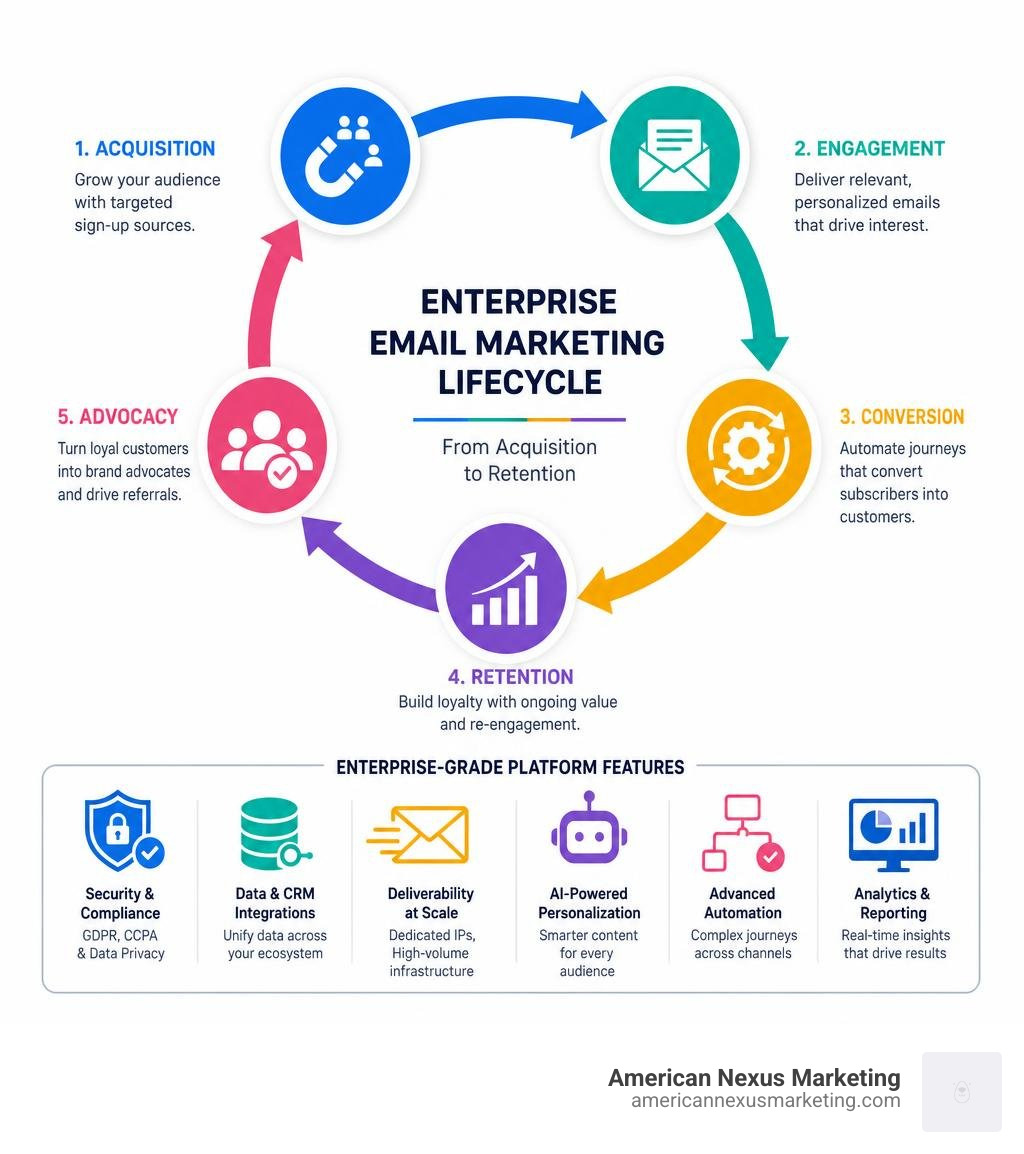
Key Criteria for the Best Email Marketing Software for Large Business
When we evaluate software for a small business, we usually look at ease of use, basic template designs, and affordable pricing tiers. But when a corporation scales to hundreds of thousands or millions of contacts, the evaluation criteria shift dramatically.
Large businesses require a foundation built on absolute reliability, ironclad security, and hyper-precise segmentation. If your platform glitches and sends a broken template to five million people, that isn’t just an embarrassing morning—it is a multi-million dollar hit to your brand equity.
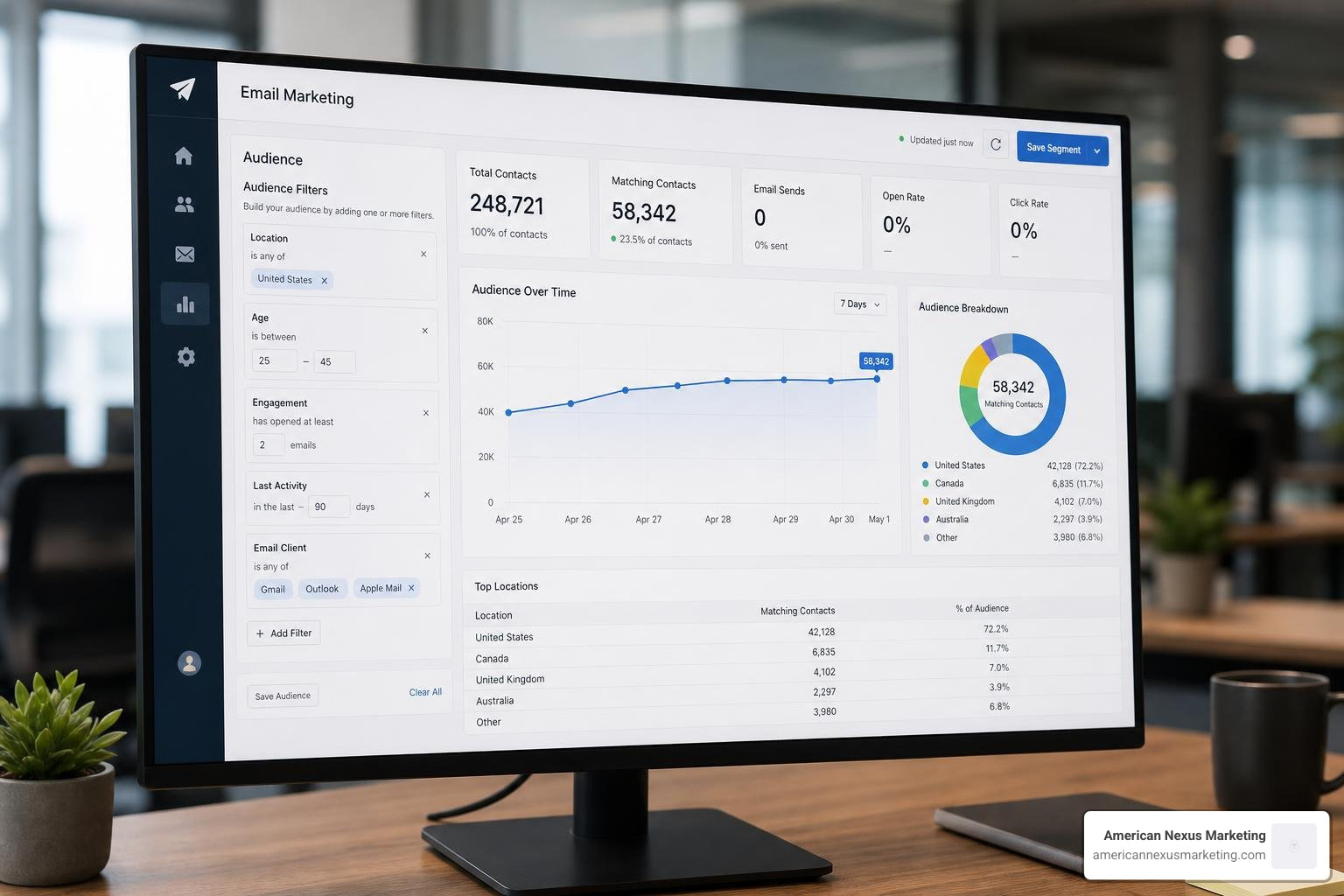
To find the best email marketing software for large business operations, we must prioritize three foundational pillars: deliverability, data security, and real-time segmentation.
Scalability and Deliverability in the Best Email Marketing Software for Large Business
At enterprise scale, deliverability is no longer about hoping your email lands in the inbox; it is a technical science. When sending high volumes of marketing and transactional messages, you cannot share an IP address with other brands. One bad sender on a shared IP can blackhole your entire campaign.
Enterprise-grade platforms provide dedicated IP addresses and the infrastructure required to manage your sender reputation. This includes native support for critical email authentication protocols:
- SPF (Sender Policy Framework): Specifies which mail servers are authorized to send email on behalf of your domain.
- DKIM (DomainKeys Identified Mail): Adds a cryptographic signature to your emails, verifying that the email was not altered in transit.
- DMARC (Domain-based Message Authentication, Reporting, and Conformance): Uses SPF and DKIM to determine the authenticity of an email message and specifies how the receiver should handle failures.
Additionally, top-tier platforms offer proactive bounce management, automatic list hygiene, and direct relationships with major Internet Service Providers (ISPs). For instance, high-throughput systems like GetResponse MAX: Enterprise Email Marketing Software are engineered to bypass peak-hour sending queues entirely, allowing enterprises to send up to 5 million emails per hour while maintaining a 99% deliverability rate.
Security and Compliance Standards for the Best Email Marketing Software for Large Business
For a global enterprise, compliance is non-negotiable. Your email platform must act as a shield, protecting customer data and adhering to strict international privacy regulations. This means full compliance with the General Data Protection Regulation (GDPR) in Europe and the California Consumer Privacy Act (CCPA) in the United States.
When auditing the security standards of enterprise email tools, look for the following features:
- SOC 2 Type II Certification: Ensures the vendor has established and follows strict information security policies and procedures.
- Single Sign-On (SSO): Allows your IT department to manage user access securely through tools like Okta or Azure AD, reducing password vulnerabilities.
- Role-Based Access Control (RBAC): Restricts platform permissions so that only authorized team members can export lists, edit templates, or trigger campaigns.
- Data Encryption: Ensures customer records are encrypted both at rest and in transit.
- Global Opt-In/Opt-Out Management: Handles complex preference centers across multiple brands and jurisdictions, ensuring that a user who opts out on one channel is immediately suppressed across all coordinated systems.
Enterprise-Grade Features: AI, Automation, and Omnichannel Orchestration
The days of blasting a single weekly newsletter to your entire database are long gone. Modern enterprise marketing is defined by hyper-personalization and omnichannel orchestration. Customers expect a seamless transition as they jump from an email to an SMS, a mobile push notification, or even a physical direct mail piece.
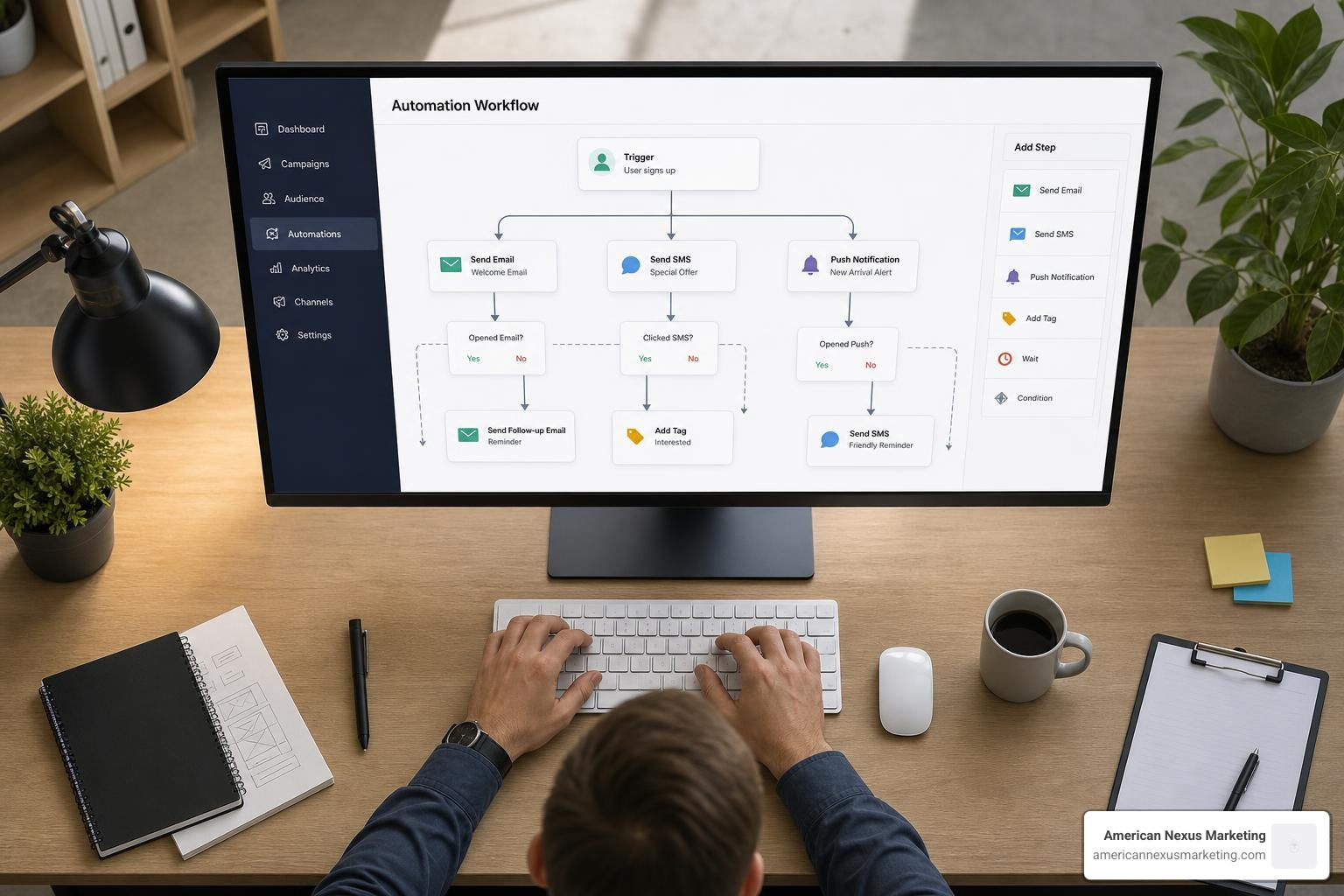
Advanced Automation and Predictive AI
Enterprise platforms use machine learning models to analyze billions of customer interactions, turning raw data into actionable marketing steps. Rather than relying on static rules, advanced platforms use predictive AI to optimize campaigns autonomously.
Key AI capabilities in enterprise software include:
- Send-Time Optimization (STO): Analyzes historical engagement data to deliver emails at the exact moment an individual subscriber is most likely to open them.
- Predictive Content and Generative AI: Generates personalized subject lines, copy, and product recommendations tailored to a user’s unique browsing history.
- Einstein Trust Layer: Featured in Salesforce’s ecosystem, this security layer ensures that generative AI tools can write personalized copy without exposing sensitive customer data to public large language models.
- Engagement Scoring: Assigns dynamic scores to subscribers based on their interactions, allowing you to automatically target highly active users or trigger win-back campaigns for slipping segments.
Omnichannel Orchestration and Data Integration
Your customer data does not live in a vacuum, and your marketing shouldn’t either. The best enterprise platforms act as central nervous systems, unifying email, SMS, WhatsApp, push notifications, and even traditional offline mail.
By connecting digital channels with physical touchpoints, you can build truly cohesive journeys. For example, using Multi-Channel Marketing with Adobe Campaign | Adobe for Business, an enterprise can coordinate a digital product launch and automatically trigger a personalized physical mailer through a direct mail vendor for high-value customers who did not open the initial email. This omnichannel approach eliminates data silos and ensures a unified customer experience across all physical and digital touchpoints.
Top Enterprise Platforms Compared
Choosing the right enterprise email marketing system requires looking past basic feature checklists. Instead, we must look at how these platforms handle complex data architectures and integrate with your existing technology stack.

To help you evaluate your options, let us look at how the leading platforms compare across scalability, deliverability, and integration flexibility.
Salesforce Marketing Cloud Engagement
Salesforce Marketing Cloud Engagement (formerly known as ExactTarget) is an absolute powerhouse built for massive, complex organizations. If your business already uses Salesforce as its primary CRM, this is often the most logical choice.
Operating at a scale that processes over 4 billion messages daily, Salesforce’s Email Studio allows enterprise teams to build highly sophisticated, data-driven campaigns.
- Strengths: Unmatched data integration with the Salesforce CRM; robust predictive capabilities via Einstein AI; enterprise-grade security and multi-brand tenant management.
- Weaknesses: Steep learning curve; long implementation times; high licensing costs starting around $1,250 USD per month for the Professional tier, which can scale rapidly.
- Key Feature: Native integration with Journey Builder to map complex, multi-branch customer lifecycles across email, SMS, advertising, and web.
For a deeper look at their enterprise capabilities, check out the official Email Marketing Software | Salesforce AU product page.
Adobe Campaign and Marketo Engage
Adobe offers two distinct, heavy-duty solutions within its Experience Cloud, each serving a very different enterprise audience.
Adobe Campaign is designed for B2C brands requiring deep cross-channel orchestration across both online and offline channels. It excels at unifying customer profiles from disparate systems and automating complex workflows.
- Strengths: Excellent offline integration (like direct mail); powerful multi-lingual campaign management; high-performance cloud infrastructure.
- Weaknesses: Highly technical; usually requires dedicated developers or partners to manage and configure.
Adobe Marketo Engage, on the other hand, is the gold standard for large-scale B2B marketing. It is built specifically for lead generation, account-based marketing (ABM), lead scoring, and aligning marketing pipelines with sales teams.
- Strengths: Advanced B2B lead nurturing and scoring; robust multi-channel campaign tracking; seamless CRM integrations.
- Weaknesses: The user interface can feel dated; expensive pricing model based on contact limits.
To learn more about how Adobe handles enterprise-scale campaigns, visit Adobe Campaign | Multi-Channel Marketing & Workflow Automation.
Klaviyo Enterprise and GetResponse MAX
For B2C brands, particularly in the ecommerce and retail spaces, Klaviyo and GetResponse MAX represent highly agile, modern alternatives to legacy enterprise suites.
Klaviyo Enterprise has built its reputation on having an exceptionally powerful, real-time database. By unifying email, SMS, push, and WhatsApp into a single customer data platform (CDP) model, Klaviyo eliminates the lag time associated with traditional data syncing.
- Strengths: Real-time segmentation; native B2C channel integration; clear multi-touch attribution; highly intuitive interface that reduces developer dependency.
- Weaknesses: Pricing scales aggressively as contact lists grow; can get expensive for high-volume senders.
Discover how Klaviyo helps B2C brands eliminate stack fragmentation on the Enterprise Marketing Platform for Omnichannel B2C Brands – Klaviyo page.
GetResponse MAX offers an incredibly balanced, high-ROI enterprise package. Known for its outstanding deliverability rates and predictable pricing, it is a favorite for brands that need high-volume sending without the enterprise complexity tax.
- Strengths: Sends up to 5 million emails per hour; built-in AI product recommendations; excellent customer support with response times under two minutes; highly competitive total cost of ownership (TCO).
- Weaknesses: Fewer native integrations for legacy offline databases compared to Adobe.
Total Cost of Ownership and Hidden Enterprise Fees
When budgeting for the best email marketing software for large business operations, looking only at the monthly software license is a recipe for budget overruns. The Total Cost of Ownership (TCO) of enterprise software includes several components that are rarely advertised on pricing pages.
To avoid unexpected costs, make sure to factor these expenses into your budget:
- Onboarding and Implementation Fees: Enterprise platforms often require professional setup to map data fields, configure IP warming, and train staff. For example, HubSpot’s mandatory enterprise onboarding fees range from $3,000 to over $7,000 as a one-time cost.
- Dedicated IP Address Fees: While some enterprise tiers include one dedicated IP, high-volume senders may need multiple IPs to segment transactional and marketing traffic, which can cost thousands of dollars annually per IP.
- Contact-Limit Overage Charges: Many platforms charge based on the total number of contacts in your database. Be careful with platforms like Mailchimp that count duplicate contacts across different lists toward your total limit, which can quickly inflate your bill.
- Premium Support and Account Management: Access to 24/7 phone support, guaranteed SLA response times, and a dedicated Customer Success Manager (CSM) is often an add-on charge that can add 15% to 20% to your contract value.
- API and Integration Limits: If your systems make millions of API calls daily to sync customer data, you may run into rate limits that require upgrading to premium API packages.
Frequently Asked Questions about Enterprise Email Marketing
What is the difference between small business and enterprise email marketing software?
Small business tools focus on simplicity, templates, and low costs, but they lack the infrastructure to handle massive data files or complex security. Enterprise software offers advanced features like dedicated IP addresses, custom API access, multi-brand governance, role-based security, and machine learning models built to handle millions of customer records.
How do large businesses manage email deliverability at scale?
Large businesses use dedicated IP addresses and strict authentication protocols (SPF, DKIM, and DMARC) to protect their sender reputation. They also run automated list hygiene workflows to remove inactive addresses and use phased IP warming strategies when transitioning to new sending infrastructure.
What is the “marketing coordination tax” in enterprise marketing?
The “marketing coordination tax” refers to the time and money wasted when marketing teams use fragmented, disconnected tools. When data is trapped in separate email, SMS, and push notification systems, employees spend hours manually syncing lists and fixing broken attributions rather than building high-performing campaigns.
Conclusion
Selecting the best email marketing software for large business needs is a strategic decision that shapes how your brand connects with customers. Whether you choose the CRM-native power of Salesforce, the multi-channel orchestration of Adobe, or the agile, data-driven platforms of Klaviyo and GetResponse MAX, the key is to align your software choice with your company’s data architecture and long-term marketing goals.
At American Nexus Marketing, we specialize in helping businesses navigate these complex platform transitions without the jargon. If you are currently growing your operations and want to see how smaller, agile tools compare before making the leap to enterprise-grade software, take a look at our comprehensive guide to Compare small business email marketing tools to build a scalable, future-proof marketing strategy today.
Pingback: Best Email CRM for Small Business in 2026