
The Best CRM Software for Startups in 2026: A Quick-Start Guide
Choosing the right crm software for startups could be one of the most important decisions you make in your first few years of business. About 80% of new businesses survive year one, but only 50% make it to year five — and how well you manage customer relationships plays a huge role in which side of that statistic you land on.
Here is a quick look at the top CRM options for startups to help you find the right fit fast:
| CRM Platform | Best For | Starting Price |
|---|---|---|
| HubSpot | Marketing-led teams | Free |
| Pipedrive | Sales-led teams | ~$12/user/month |
| Zoho CRM | Feature depth on a budget | Low-cost paid tiers |
| monday CRM | Teams managing sales + delivery | ~$10/seat/month |
| Streak | Gmail-native workflows | Free tier available |
| Freshsales | Simple, fast setup | Free tier available |
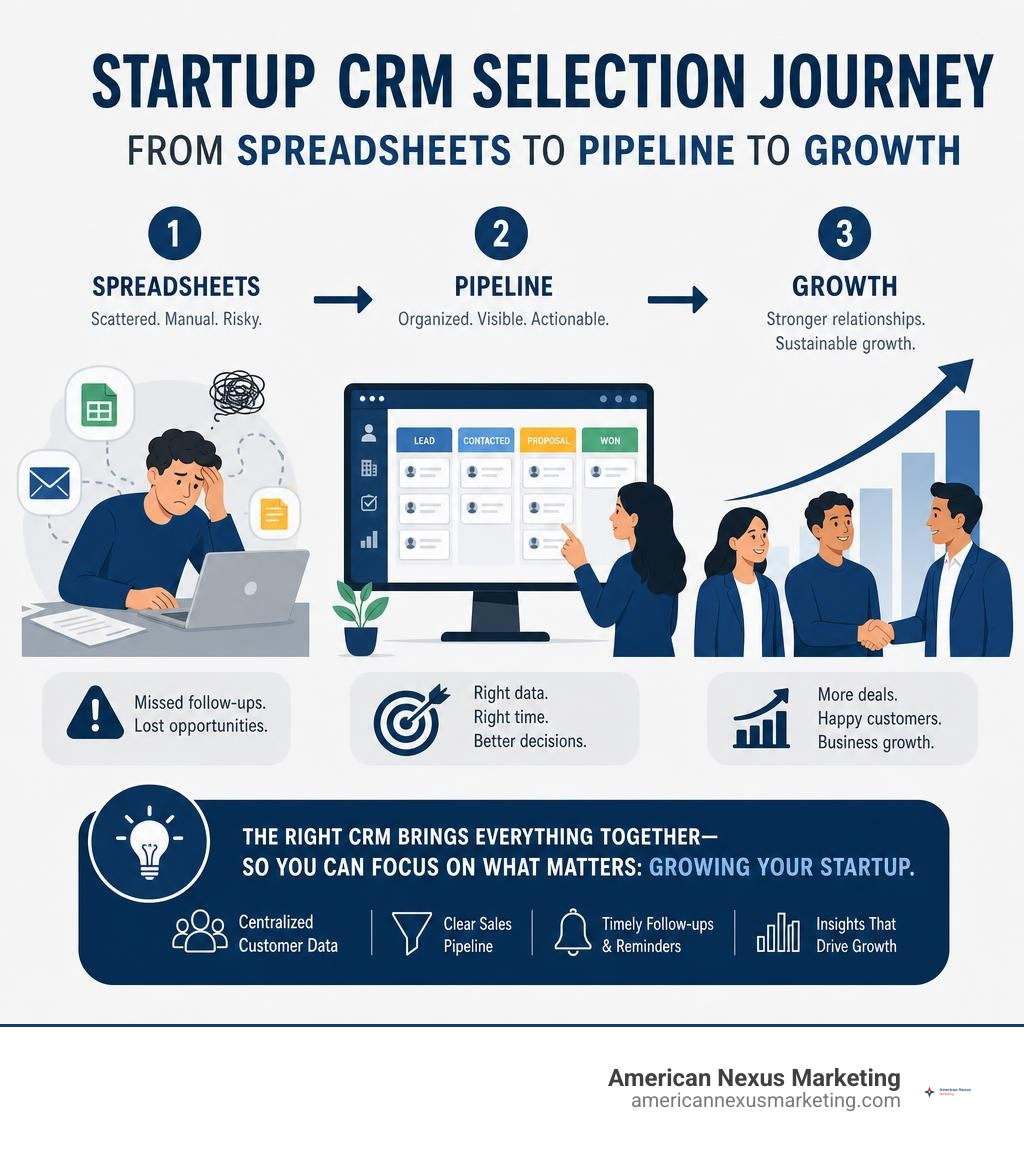
If you are a solo founder or running a small team, the honest truth is this: you probably have customer data living in at least three different places right now. An inbox. A spreadsheet. Maybe a notes app. That scattered setup is costing you deals.
A CRM pulls all of that into one place — your contacts, your pipeline, your follow-ups — so nothing slips through the cracks.
The sections below break down the key features to look for, how to compare your options, and what to avoid when picking a platform for your stage of growth.
Crm software for startups word list:
Why Your Business Needs CRM Software for Startups
In the early stages of a startup, founders often try to keep everything in their heads. You are the product visionary, the marketer, the customer support specialist, and the sales rep all at once. This “founder-led sales” motion is completely normal—and actually recommended—until you hit early traction milestsones (often up to $5M in annual recurring revenue).
However, relying entirely on memory or scattered notebooks is a recipe for missed follow-ups. If you fail to follow up with a lead, they will go to a competitor who does.
Implementing a dedicated crm software for startups is the ultimate way to professionalize your sales process. When startups put a structured system in place, the results speak for themselves. Small businesses implementing robust CRM systems have seen a 42% increase in customer satisfaction and a 41% increase in customer retention.
Furthermore, 71% of modern consumers expect highly personalized experiences. You cannot personalize an interaction if you cannot remember what you discussed with a prospect three weeks ago. Since loyal customers can boost your profits by up to 95%, building a compounding customer data asset from day one is essential to your long-term survival.

Overcoming the Chaos of Spreadsheets
Let’s be honest: spreadsheets are the gateway drug of business organization. They are free, familiar, and highly customizable. But they do not scale.
A spreadsheet-based tracking system works reasonably well when you have 10 contacts. It starts getting incredibly shaky when you hit 50 leads. By the time you reach 200 contacts, the system collapses entirely.
Here is why spreadsheets hold your startup back:
- Data Silos: Information gets locked in individual files. When one co-founder goes on vacation, the rest of the team loses context on active deals. In fact, 81% of IT leaders note that data silos are actively hindering digital transformation and growth efforts.
- No History Tracking: A spreadsheet only shows you a static snapshot of today. It won’t show you the email exchange from last Tuesday, the demo feedback, or whether the prospect opened your latest proposal.
- Lack of Automation: You have to manually type in every update. If updating your pipeline takes more than a minute of administrative work, busy founders simply won’t do it.
To help you move away from manual tracking without breaking the bank, check out our Small Team CRM Guide: Free and Cheap Tools That Actually Work to discover how to transition seamlessly.
When is the Right Time to Invest in CRM Software for Startups?
We are often asked: “When should we actually buy a CRM?”
The short answer is now. The longer answer is that you should invest in a CRM system before you think you need one. Specifically, the moment you have more leads than you can easily track in your head (usually between 50 and 200 contacts), or as soon as a second person joins your sales process.
Waiting too long creates a massive data debt. Startups that wait until they have hundreds of contacts often spend weeks cleaning up messy spreadsheets, deduplicating records, and trying to reconstruct interaction histories.
Adopting a system early prevents lead leakage and builds clean data habits. For a deeper look at budget-friendly options that can grow alongside you, take a look at our guide to The Best Low-Cost CRM Software for Small Business in 2026.
Key Features to Look For in a Startup CRM
When evaluating crm software for startups, it is easy to get distracted by flashy features you will never use. For an early-stage team, simplicity and speed are everything. You need a platform that helps you close deals today, not a complex enterprise system that requires a dedicated administrator to maintain.
At a minimum, your startup CRM should include:
- Contact and Account Management: A single, unified view of every interaction, email, and meeting associated with a customer.
- Visual Pipeline Tracking: A Kanban-style board that lets you drag and drop deals through clear stages (e.g., Qualified, Demo Scheduled, Proposal Sent, Closed Won).
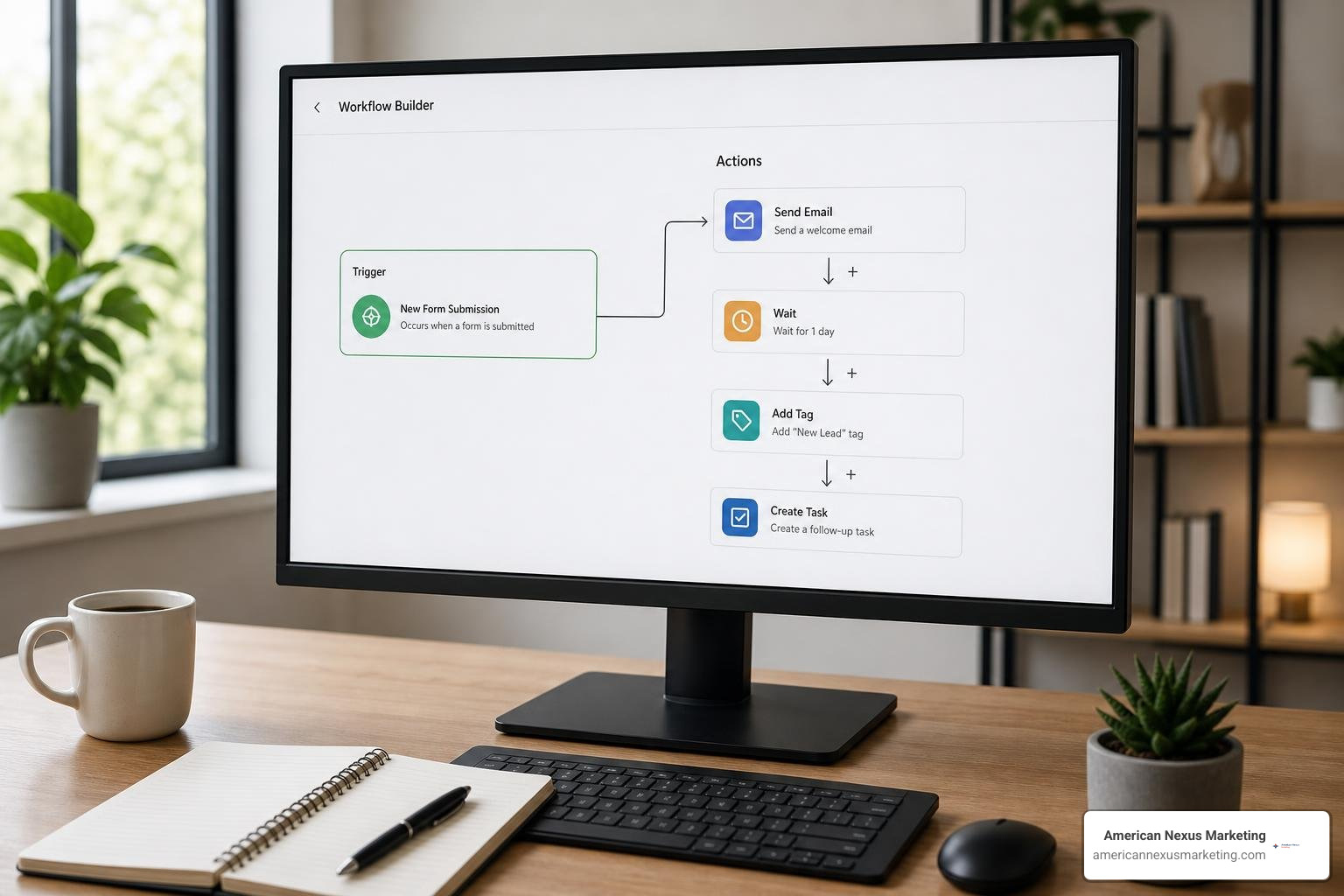
- Workflow Automation: The ability to auto-create tasks, send follow-up reminders, or trigger email sequences based on pipeline updates.
- Intuitive Reporting: Basic dashboards that show you your active pipeline value, win/loss ratios, and conversion rates without requiring complex database queries.
How AI is Revolutionizing CRM Software for Startups
Artificial intelligence is no longer just a buzzword; it is a fundamental shift in how early-stage teams operate. In fact, 92% of small and medium business marketing teams are already using CRM tools alongside AI technologies.
For resource-constrained startups, AI acts as an extra team member. Around 85% of SMBs utilizing AI report significant improvements in how their sales representatives use their time. Instead of copy-pasting data, AI lets you automate the administrative heavy lifting.
Key AI capabilities to look for in 2026 include:
- AI Lead Scoring: Algorithms that analyze website activity and company profiles to prioritize your highest-value prospects automatically.
- One-Click Follow-Ups and Outreach: Generative AI that drafts highly personalized email follow-ups based on previous call notes and sentiment analysis.
- Voice-to-CRM Transcription: The ability to speak a 30-second voice note after a meeting and have the AI automatically extract structured notes, log tasks, and update deal values.
If you want to experience an AI-native approach designed to put your pipeline on autopilot, explore Crmzix — The AI-native CRM, which features built-in smart assistants, meeting-to-task transcription, and automated proposal generators.
Essential Integrations for a Unified Tech Stack
Your CRM cannot exist on an island. It must talk to the tools your team uses every single day.
When your CRM is integrated with your daily tech stack, you eliminate context switching. For example, when a new lead fills out a form on your site, it should instantly notify your team in Slack, create a record in your CRM, and add them to a marketing sequence.
Make sure your chosen platform integrates seamlessly with:
- Your Email and Calendar: Every sent email and scheduled meeting should automatically sync to the contact’s timeline. Read more about why this is non-negotiable in Why You Need CRM Software with Email Integration Right Now.
- Your Marketing Tools: If you use external newsletter tools, ensure they sync two-way. Learn how to connect your systems in our guide on How to Find the Best CRM Software Integrated with Mailchimp.
- Payment Gateways: Embedding payment links (like Stripe or PayPal) directly into your quotes helps accelerate cash flow and keeps your financial records unified.
Evaluating the Best CRM Solutions for Early-Stage Teams
To make your search easier, let’s look at how different CRM categories match up against the unique constraints of early-stage startups.

No-Code and Custom CRM Builders
If your startup has a highly unique operational workflow, traditional SaaS templates might feel too rigid. Forcing your team to adapt to a software’s predefined structure can kill productivity.
This is where no-code custom builders shine. They allow you to build exactly what your startup needs using drag-and-drop interfaces and natural language prompts. You can consolidate your tech stack by housing your lead pipeline, investor tracker, and customer onboarding portal in one single, secure database.
To build a fully tailored system in minutes without writing a single line of code, you can Generate your CRM for startups with AI in minutes | Softr, which syncs with your existing data sources and provides custom user permissions.
AI-Powered and Solo-Founder Platforms
Solo founders and indie hackers face a different challenge: the “momentum gap.” You launch a product, get a sudden burst of attention on social media, but then lose those potential customers because you cannot keep up with manual follow-ups across scattered channels.
If you are a team of one, you do not need a heavy enterprise pipeline. You need a traction tool designed to capture early interest, launch waitlist pages in minutes, and help you draft personalized outreach across email and social networks.
For solo builders looking to capture early traction and automate their outreach workflow, Startr – AI-Powered CRM for Solo Founders and Indie Hackers offers a lightweight, founder-focused alternative to traditional sales platforms.
Open-Source and Scalable Systems
For technical founders, agencies, and rapidly growing teams, open-source and highly scalable platforms offer a powerful path forward. These tools give you complete control over your data, API access to build custom integrations, and the flexibility to scale from 3 co-founders to a 50-person team without experiencing vendor lock-in.
Furthermore, if you are selling to European markets, using an open-source, GDPR-compliant CRM hosted in the EU can eliminate compliance and data privacy headaches early on.
If you want a highly flexible platform that combines pipeline management with a native unified inbox for LinkedIn, WhatsApp, and email, explore CRM for Startups: Pipeline, Automation & AI Tools. Additionally, for a highly polished, simple, and pocket-sized pipeline tool backed by a trusted ecosystem, check out www.bigin.com.
Balancing Cost and Value
While many platforms advertise enticing “free” tiers, startups must look closely at the fine print. This is what we call the “free tier trap.”
A free plan is fantastic for getting started, but it often limits essential functions—like basic workflow automations, custom reporting, or integrations. Once your startup begins to scale and you are forced to unlock those features, the pricing can jump exponentially from free to hundreds of dollars per user per month.
To protect your runway, evaluate what your CRM will cost 12 to 24 months from now when your team grows. For a realistic breakdown of hidden fees and how to plan your budget, read The Real CRM Software Cost for Small Business and How to Avoid Overpaying. If your primary sales channel is email, you can also explore The Best Email CRM for Small Business to Keep Your Contacts Close to find high-value, low-cost alternatives.
Frequently Asked Questions About Startup CRMs
How much does a CRM typically cost for a startup?
CRM pricing varies widely. Free tiers (like those offered by HubSpot or Streak) cost $0 but have strict feature limitations. Entry-level paid tiers typically range from $10 to $30 per user per month. Advanced AI-native platforms or specialized systems can range from $30 to over $150 per user per month. We recommend starting with a low-cost or free tier that has a clear, affordable upgrade path.
Can a startup use a CRM to track fundraising and investors?
Yes! Many savvy founders set up a dedicated pipeline specifically for fundraising. Instead of tracking deals, the pipeline stages represent your investor journey (e.g., Target VC, Warm Intro, First Pitch, Due Diligence, Term Sheet, Closed). You can attach pitch decks, log meeting notes, and track target check sizes in the exact same database you use for your customers.
How do we ensure our team actually adopts the CRM?
To ensure team buy-in, follow three simple rules:
- Keep it simple: Do not build a 15-stage pipeline. Start with 4 or 5 clear stages.
- Standardize data early: Agree on naming conventions and required fields before importing any contacts.
- Automate the boring stuff: Connect your email and calendar immediately so your team doesn’t have to manually log their communication history.
Conclusion
Finding the right crm software for startups is not about buying the most expensive or feature-rich software on the market. It is about choosing a tool that fits your current growth constraints, aligns with your go-to-market motion, and is intuitive enough for your team to use every single day.
At American Nexus Marketing, we are dedicated to providing clear, jargon-free, checklist-driven digital marketing and CRM guidance tailored specifically for small business owners and solo founders. We believe that your data deserves better than messy spreadsheets, and we want to help you build a compounding asset that fuels your long-term success.
Ready to take the next step and find the perfect match for your team? Explore our comprehensive breakdown of the Find the Best CRM for Your Small Business in 2026 to make your decision with confidence.