

Sprocket Science: Finding Software Similar to HubSpot for Your Small Business
Is There Really Good Software Similar to HubSpot — Without the Huge Price Tag?
If you’re a small business owner hunting for software similar to HubSpot, here’s your quick answer:
Yes — and most of them cost a fraction of the price.
The best HubSpot alternatives for small businesses in 2026 are:
- ActiveCampaign — Best for advanced email and marketing automation
- Brevo — Best free plan; charges per email, not per contact
- Pipedrive — Best for visual, sales-first pipeline management
- Zoho CRM — Best budget-friendly all-in-one option
- Omnisend — Best for ecommerce stores
- Conduyt — Best AI-native CRM with flat-rate pricing
- Creatio — Best for no-code, enterprise-level workflows
- Nutaan CRM — Best for outbound-heavy sales teams
HubSpot is everywhere. It owns close to a third of the marketing automation market, and for good reason — its free CRM is genuinely useful, and the platform does a lot of things well.
But here’s the problem almost every small business owner runs into eventually.
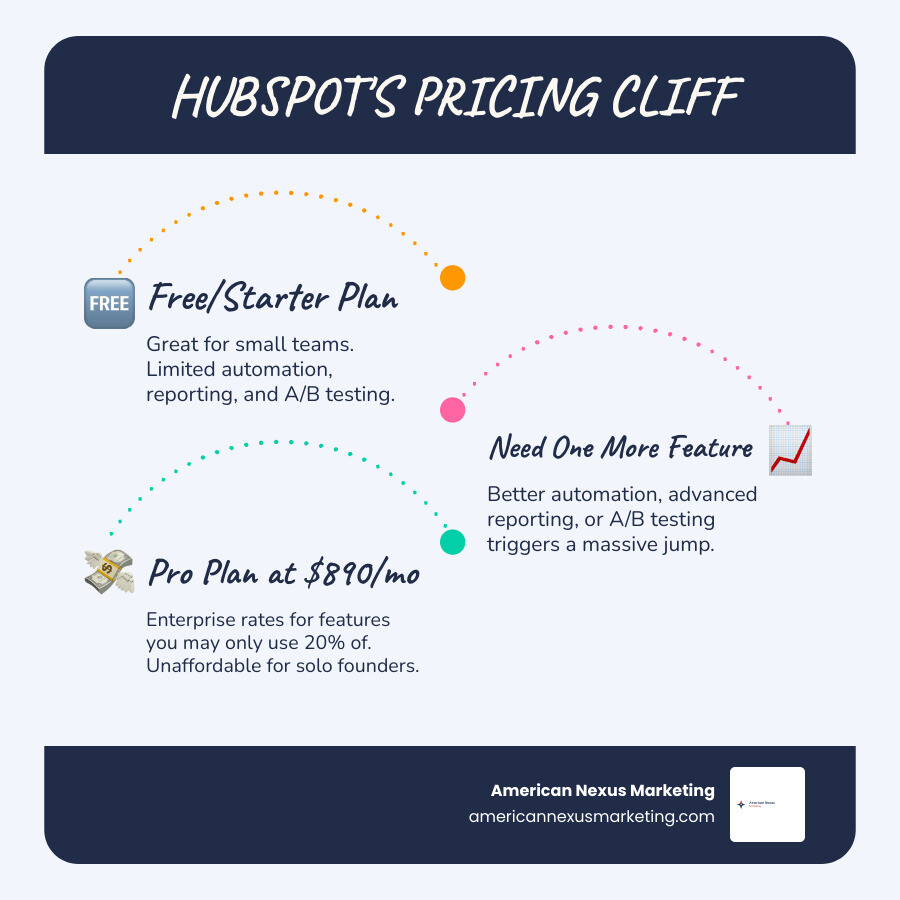
HubSpot’s free and Starter plans are great. Then you need one more feature — better automation, more reporting, A/B testing — and suddenly you’re staring at a $890/month Pro plan. That’s not a small step up. That’s a cliff.
For a solo founder or a lean team, that price jump simply doesn’t make sense. You’d be paying enterprise rates for features you may only use 20% of.
The good news? You don’t have to choose between “HubSpot’s full suite” and “duct-taping five free tools together.” There’s a whole landscape of capable, affordable platforms built for businesses exactly like yours.
Why Businesses Seek Software Similar to HubSpot
Let’s address the elephant in the room: HubSpot is a fantastic product. It is highly polished, deeply integrated, and features a great mobile app. But as many scaling companies discover, the relationship can quickly turn sour.
According to research from Capterra, 40% of buyers seeking CRM software say their current methods are inefficient — and a significant portion of those dissatisfied users are actually HubSpot customers trying to escape a ballooning monthly bill.
Here are the primary reasons we see small business owners looking for software similar to HubSpot:
1. The Pro Pricing “Cliff”
HubSpot’s pricing model is designed like a funnel. They draw you in with a generous free CRM and low-cost Starter tiers ($20 to $50 per month). But the moment you need professional-grade marketing automation, custom reporting, or advanced pipeline features, you hit a massive financial wall.
The Marketing Hub Professional plan sits at a hefty $890/month, and it requires a mandatory 12-month contract. When you add on required onboarding fees and the $200/month reporting add-on, the initial cost is staggering for a growing startup.
2. Mandatory Onboarding and Locked-In Contracts
Unlike most modern SaaS platforms that let you pay-as-you-go, upgrading your HubSpot account often requires a long-term commitment. You are forced to sign annual contracts and pay thousands of dollars upfront for mandatory onboarding support. If you realize three months in that the tool isn’t a fit, you are still on the hook for the remaining nine months.
In contrast, alternative solutions like EngageBay offer their fully featured Pro plan for just $49.99/month with absolutely no compulsory onboarding fees.
3. Feature Creep and Bloated Interfaces
HubSpot began its life as an inbound marketing platform. Over the last two decades, it has bolted on sales hubs, service hubs, and operations hubs. For a pure sales team or a solo founder, this results in a bloated, overwhelming interface. Reps can easily get lost in a maze of menus, tabs, and features they will never use.
If you want to dive deeper into how CRM pricing works and how to avoid these hidden traps, check out our guide on The Real CRM Software Cost for Small Business and How to Avoid Overpaying.
Top-Rated HubSpot Alternatives for Startups and SMBs in 2026
When you begin evaluating alternatives, you must first decide what matters most to your business. Are you trying to build a massive inbound marketing engine, or do you simply need a clean, visual space to track your sales pipeline?
To help you sort through your options, here is a quick breakdown of how the top-rated HubSpot alternatives compare on pricing and core focus:
| Platform | Starting Price (Approx.) | Pricing Model | Core Focus | Best For |
|---|---|---|---|---|
| ActiveCampaign | $19 / month | Contact-based | Marketing & Email Automation | Advanced email sequences & triggers |
| Brevo | Free / $39 / month | Email volume-based | Multi-channel engagement | Large contact lists with low-frequency sends |
| Pipedrive | $24 / user / month | Seat-based | Visual sales pipelines | Sales-first teams and deal tracking |
| Zoho CRM | Free / $20 / user / month | Seat-based | All-in-one business suite | Budget-conscious businesses wanting a broad suite |
If you want a deeper look at how these platforms stack up against the giant, take a look at The Ultimate Guide to Companies Like HubSpot for Growing Businesses.
ActiveCampaign: Best for Advanced Marketing Automation
If you love HubSpot’s automated workflows but hate its price tag, ActiveCampaign is your best bet.
While HubSpot’s robust omnichannel marketing automation will cost you $890/month, ActiveCampaign’s Marketing Starter plan starts at a modest $19/month. This makes it an incredibly cost-effective way to build complex, behavior-triggered email sequences.

ActiveCampaign excels in:
- True Omnichannel Automation: You can build visual maps that coordinate email, SMS, site tracking, and CRM updates based on exactly how a prospect interacts with your brand.
- Superior Reporting: Many marketing professionals argue that ActiveCampaign’s standard reporting features are actually superior to HubSpot’s out-of-the-box options.
- Deep Integrations: It connects seamlessly with hundreds of third-party tools, meaning you don’t have to worry about data silos.
Note on Pricing: ActiveCampaign uses a contact-based pricing model, meaning your monthly bill will scale as your list grows. However, for early-stage startups, it provides enterprise-grade automation features at an entry-level price.
For tips on matching your email needs with the right platform, read our analysis on How to Choose the Best Email Marketing Tool for Your Small Business in 2026.
Brevo: Best Value Software Similar to HubSpot for Growing Lists
For businesses with large contact lists that do not send emails daily, traditional contact-based pricing models are a financial nightmare. This is where Brevo (formerly Sendinblue) shines.
Brevo’s free plan is incredibly generous, offering unlimited contact storage, a built-in CRM, basic marketing automation, and web tracking. When you are ready to upgrade, their paid plans start at just $39/month for 20,000 emails.
Why Brevo is a top-tier alternative:
- Per-Email Pricing: Because Brevo charges based on the number of emails you send rather than the number of contacts you store, you can keep 100,000 inactive or low-frequency leads in your system without paying a dime extra.
- Transactional Emails: If you run an online store or app, Brevo’s robust transactional email API (for invoices, shipping updates, and password resets) is top-of-class.
- Unified Inbox: You can manage email, SMS, and WhatsApp campaigns all from a single dashboard.
If you are looking for a marketing-centric CRM that plays nicely with other tools, you might also want to explore How to Find the Best CRM Software Integrated with Mailchimp.
Pipedrive: Best Sales-First Pipeline Management
If your business relies on active, outbound sales reps rather than passive inbound content marketing, HubSpot can feel incredibly clunky. Pipedrive, on the other hand, was built by salespeople, for salespeople.
Starting at $24/user/month (with discounts for annual billing), Pipedrive is designed around a clean, visual drag-and-drop deal pipeline.

What makes Pipedrive stand out:
- Focus on Action: Pipedrive’s philosophy is that you can’t control outcomes, but you can control activities. It prompts reps to schedule the next action (a call, email, or meeting) every time they move a deal forward.
- Visual Simplicity: Reps can map out their sales pipelines visually using drag-and-drop card-based pipelines to track lead stages easily.
- Calendar Sync: You can easily sync calendar tasks with your CRM to ensure daily tasks are not missed or manually duplicated.
If you are running a lean team and need a tool that gets out of your way and helps you close deals, check out our Small Team CRM Guide: Free and Cheap Tools That Actually Work.
Specialized and AI-Native Alternatives to HubSpot
As the software landscape evolves in 2026, many businesses are moving away from monolithic, all-in-one platforms. Instead, they are choosing specialized tools that excel at one specific motion, or adopting modern, AI-native systems that drastically reduce manual data entry.
For example, if you run an online store, Omnisend is a highly specialized alternative starting at just $16/month for 6,000 emails. It features pre-built automated workflows specifically designed to recover abandoned shopping carts, sync with Shopify, and coordinate SMS marketing campaigns.
But if you want to explore the cutting edge of CRM technology, let’s look at three highly specialized platforms:
Nutaan CRM: The Ultimate Outbound-Heavy Sales Suite
For outbound-heavy sales teams who find HubSpot’s inbound focus slow and restrictive, Nutaan CRM | One CRM. Every Outbound Channel. is a game-changer.
Instead of forcing you to pay for five separate subscriptions (like Apollo for leads, Mailchimp for email, Buffer for social, and Zapier for automation), Nutaan consolidates your outbound motion into a single, synchronized platform.
Key highlights of Nutaan CRM:
- Brand DNA Engine: You teach Nutaan your brand voice, ideal customer profile (ICP), and core pain points once. The AI then writes highly personalized, on-brand outreach copy across email and social channels.
- Instant Branded Decks: The platform can generate fully customized, 12-slide sales decks tailored to a prospect’s industry in under 20 seconds.
- High Deliverability: Nutaan achieves an average email open rate of 45.7% and keeps bounce rates at a tiny 0.5% using built-in, verified lead intelligence.
Creatio: Enterprise-Grade No-Code and Agentic Workflows
If your business has highly complex, custom processes but you don’t want to hire a team of expensive developers to build them, Creatio is an incredible alternative.
As a recognized leader in low-code and CRM spaces, the AI CRM and Workflow Platform | Creatio offers a unique “composable” architecture.
Creatio’s platform is split into specialized, high-performing modules:
- Intelligent Sales and Service: The core CRM capabilities can be explored in the Creatio AI CRM Software Product Overview | Get a demo | Creatio . It helps teams close deals faster with 61% faster lead response times using AI-powered insights.
- Agentic Marketing: Through the Agentic Marketing CRM Platform with AI and No-Code | Creatio Marketing , businesses can deploy autonomous AI agents to score leads, generate content, and run multi-channel campaigns with minimal manual intervention.
- No-Code Customization: Creatio allows non-technical “citizen developers” to visually build and adapt workflows, lowering the total cost of ownership (TCO) by up to 37%.
Conduyt: The Best AI-Native Software Similar to HubSpot
For modern, tech-forward teams who want to completely move away from manual data entry, AI-Native CRM for AI Agents and Teams | Conduyt represents the future of CRM architecture.
Most legacy CRMs treat AI as a “bolt-on” feature (and charge you extra for AI tokens). Conduyt, however, is built from the ground up for AI agents and human collaboration.
Why Conduyt is revolutionary:
- Model Context Protocol (MCP) Standard: Conduyt uses the open MCP standard (supported by Anthropic, OpenAI, and Google). This means you don’t have to pay for the vendor’s proprietary AI. Instead, you can “bring your own AI” (like Claude Desktop, ChatGPT, or custom n8n workflows) and connect it directly to your CRM.
- No More Manual Data Entry: Instead of clicking 60 times to reassign or update deals, you can drop a CSV file or write a single natural language sentence like “Reassign 12 stale deals to Maya,” and the system executes it in 3 seconds.
- Flat-Rate Pricing: Conduyt completely rejects per-seat pricing models (which break down when you start using automated AI agents). Instead, they offer flat-rate monthly plans starting at $299/month with no limits on users or API endpoints.
Frequently Asked Questions About HubSpot Alternatives
Is there a completely free alternative to HubSpot?
Yes. If you want a free platform that won’t lock your data behind a paywall, Brevo is your best option. While HubSpot’s free tier limits your reporting and starts prompting you to upgrade as soon as your contact list grows, Brevo’s free plan includes unlimited contact storage, web tracking, and basic marketing automation.
Another excellent budget-friendly choice is Zoho CRM, which offers a completely free tier for up to three users, making it perfect for solo founders.
How difficult is it to migrate data from HubSpot to another CRM?
Migrating workflows and contact databases from a legacy CRM is notoriously challenging — in fact, 52% of companies find it difficult to migrate workflows. However, the process can be managed smoothly if you follow a structured sequence:
Most modern HubSpot alternatives (like Pipedrive, ActiveCampaign, and Brevo) offer native import tools that allow you to map your HubSpot CSV fields directly to their systems. The key is to clean your database before you migrate, removing inactive contacts so you don’t pay to import dead leads.
What are the key drawbacks of switching from HubSpot?
While switching can save you thousands of dollars, there are trade-offs to consider:
- Ecosystem Loss: HubSpot’s all-in-one nature means your marketing, sales, and customer service tools are natively unified. When you switch to a modular stack, you must ensure your new tools sync reliably.
- Learning Curves: Your team will need time to adapt to a new user interface. For example, while Salesforce is incredibly powerful, its interface can be highly complex — some users joke that buying Salesforce is like buying a Ferrari in a box with “best wishes for assembly.”
- Retraining Costs: The temporary loss of productivity during the transition can sometimes offset the immediate software savings, so plan your migration during a slower business season.
Conclusion
Finding software similar to HubSpot doesn’t mean you have to compromise on quality. Whether you choose the advanced automation of ActiveCampaign, the cost-effective scaling of Brevo, the visual simplicity of Pipedrive, or the cutting-edge AI capabilities of Conduyt, there is a tool that fits both your workflow and your budget in 2026.
At American Nexus Marketing, we believe in practical, jargon-free, checklist-driven advice tailored to low-budget, solo-founder teams. You don’t need a massive enterprise budget to build a highly effective marketing and sales stack.
Before you make your next software decision, take a moment to Compare the Best All-in-One Marketing Platforms of 2026 and find the perfect engine to power your business growth!